Mark Buccella, a design strategist and co-facilitator at Together Culture, explores how we can create respectful spaces where co-creation flourishes.
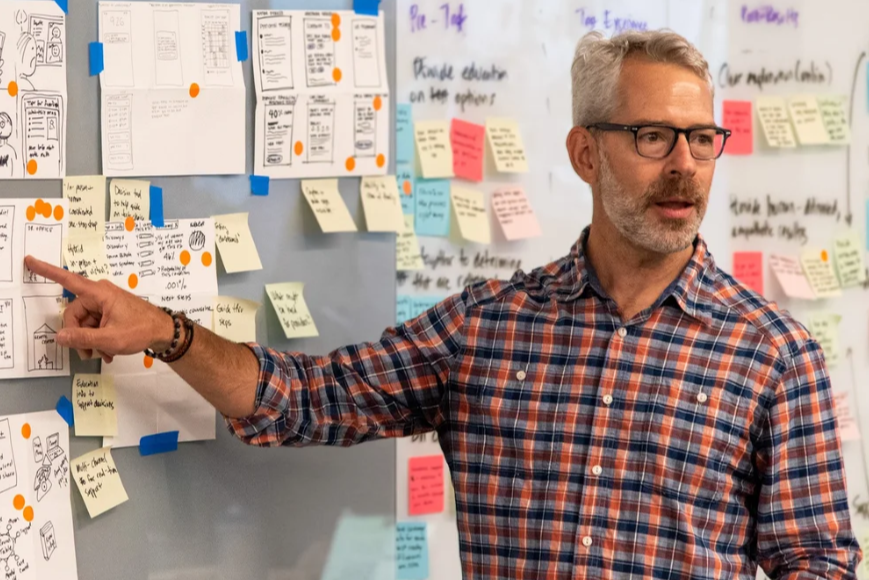
I was once asked to facilitate a series of whiteboarding sessions with senior technical leaders for an important client. The goal was to identify how a new technical capability could be developed into a software solution for customers. It was a challenge for me as a facilitator because the domain was complex and the technology was pretty far over my head. My hope going in was that my humility, charm, and go-to tactic of asking obvious questions would provide enough of a backstop for the intellectual horsepower in the room to generate some valuable ideas.
But as we know, hope is not a plan. Before long, someone had grabbed the marker, and we were trying to implement the first idea on the whiteboard. What followed was two afternoons of talking and diagramming, but no tangible, actionable ideas.
I was reminded of this when my colleague Heather shared a recent experience facilitating a group of senior managers in some ideation. Instead of following the direction to capture as many ideas as possible on sticky notes in three minutes, they just wanted to keep talking. Quietly writing for a few minutes was not how they were used to engaging.
It would be easy to blame the senior leaders in both rooms, but they weren’t really the problem. They were doing what their roles reward: leading teams toward solutions quickly and moving on to the next challenge. What was missing in both cases were the conditions for co-creation to work. And humility, charm, and good intentions don’t create those on their own.
Co-creation asks people to work in ways they may not be used to. That means exploring a problem widely before narrowing in, sharing power with the people most affected by the outcome, and trusting a process that can feel unfamiliar at first. Getting there takes planning and preparation, well before anyone picks up a marker.
Here are four conditions I try to put in place before a co-creation session.
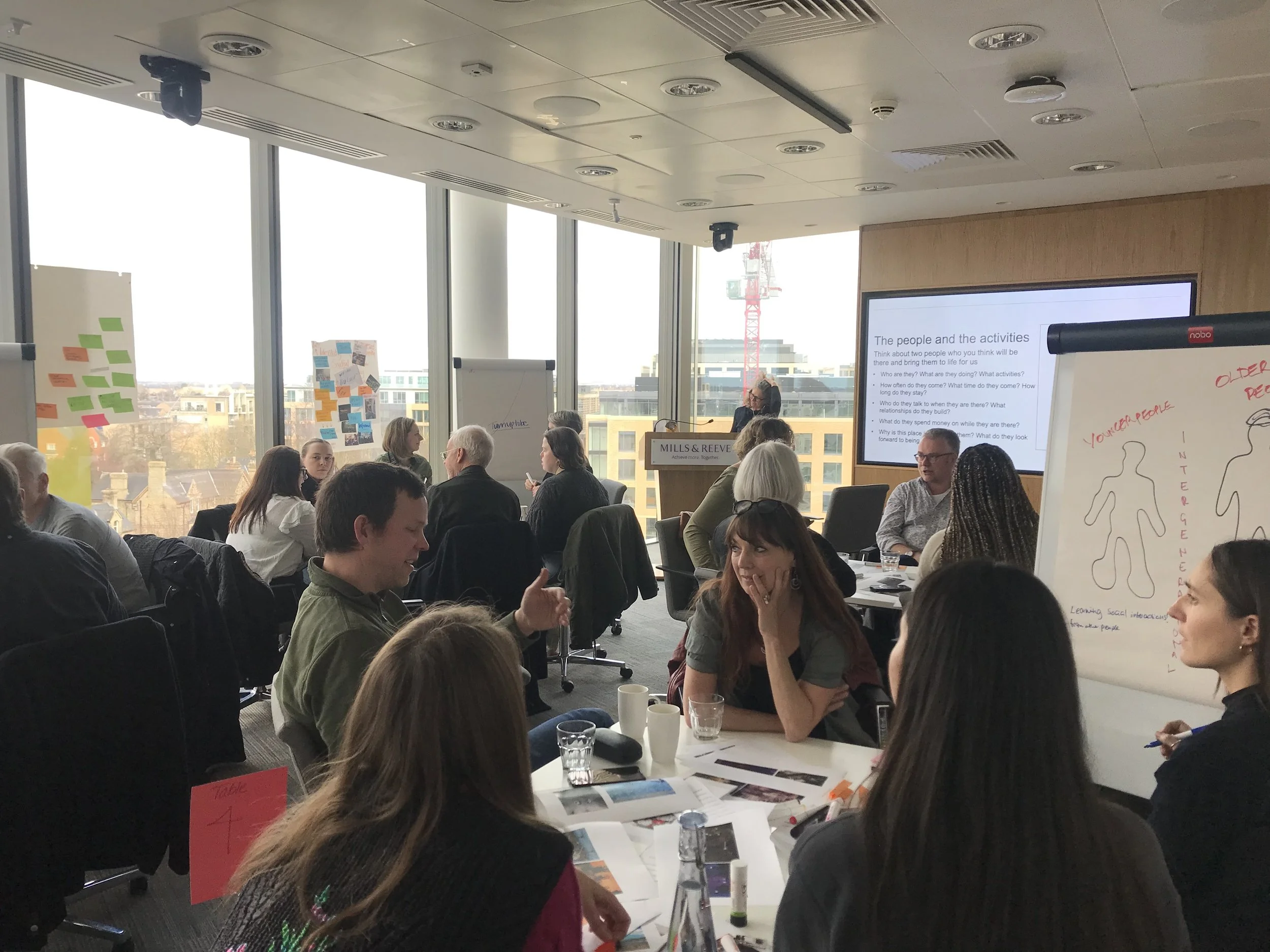
A co-creation from Together Culture and Barnstorm in 2023
1. Align before the session
Many senior leaders have deep expertise and are used to leading a group toward a solution. It can be hard for them to let go of that role. Before the session, set up a short call to align on goals. If ideation is the aim, explain why it matters to diverge and explore the problem first. That's how you make sure multiple voices are heard. It's also how the group ends up with real options to evaluate before converging on solutions. Here’s an agenda for a thirty-minute alignment call with leaders:
3 min: Define the outcome. What should be different at the end of the session?
5 min: Clarify their role. "In this session, your job isn't to find the answer; it's to make sure we haven't missed one."
3 min: Request time and resources. Ask for support for the team’s time and budget for any community participants who aren’t paid to be there.
4 min: Align on the ground rules. Ask them to model the ground rules: leave space for others and trust the process—more on this in item 3 below.
Remainder: Confirm the agenda. Walk through the plan at a high level, so there are no surprises.
2. Start with a real problem
Start with a prompt based on the real needs of the people the solution needs to serve. In a room of experts, the problem is often assumed to be understood by everyone, and stating it can feel pedantic. But grounding a group in a specific, human-centered problem sets the stage for great ideation.
Looking back, my whiteboard sessions started with a capability, looking for a problem. A human-centered prompt would have shifted the question from "how do we build this?" to "who needs this, and why?"
I like to use one or a few specific problem statements in this format:
[Person] needs [need] because [insight].
For example: "A field technician working at a remote site needs to diagnose a fault quickly because every hour of downtime costs the client thousands."
3. Set ground rules
It’s important to have a code of conduct or ground rules for collaboration. Share them with leadership in advance, and with the team at the start of the session. I tend to tailor them to each co-creation session, but there are two rules I try to establish each time:
Leave space for others. The goal is for all voices to be heard, and we need your help respecting requests to let others speak. I ask senior leaders to model this, turning their seniority into a way to open up the room rather than fill it.
Trust the process. This may not feel like a typical meeting or workshop. Trust that the collaboration exercises we've chosen will help us reach our goals and give everyone a chance to contribute. This is the rule Heather's senior managers needed when those three quiet minutes with sticky notes felt uncomfortable.
4. Bring the right people into the room
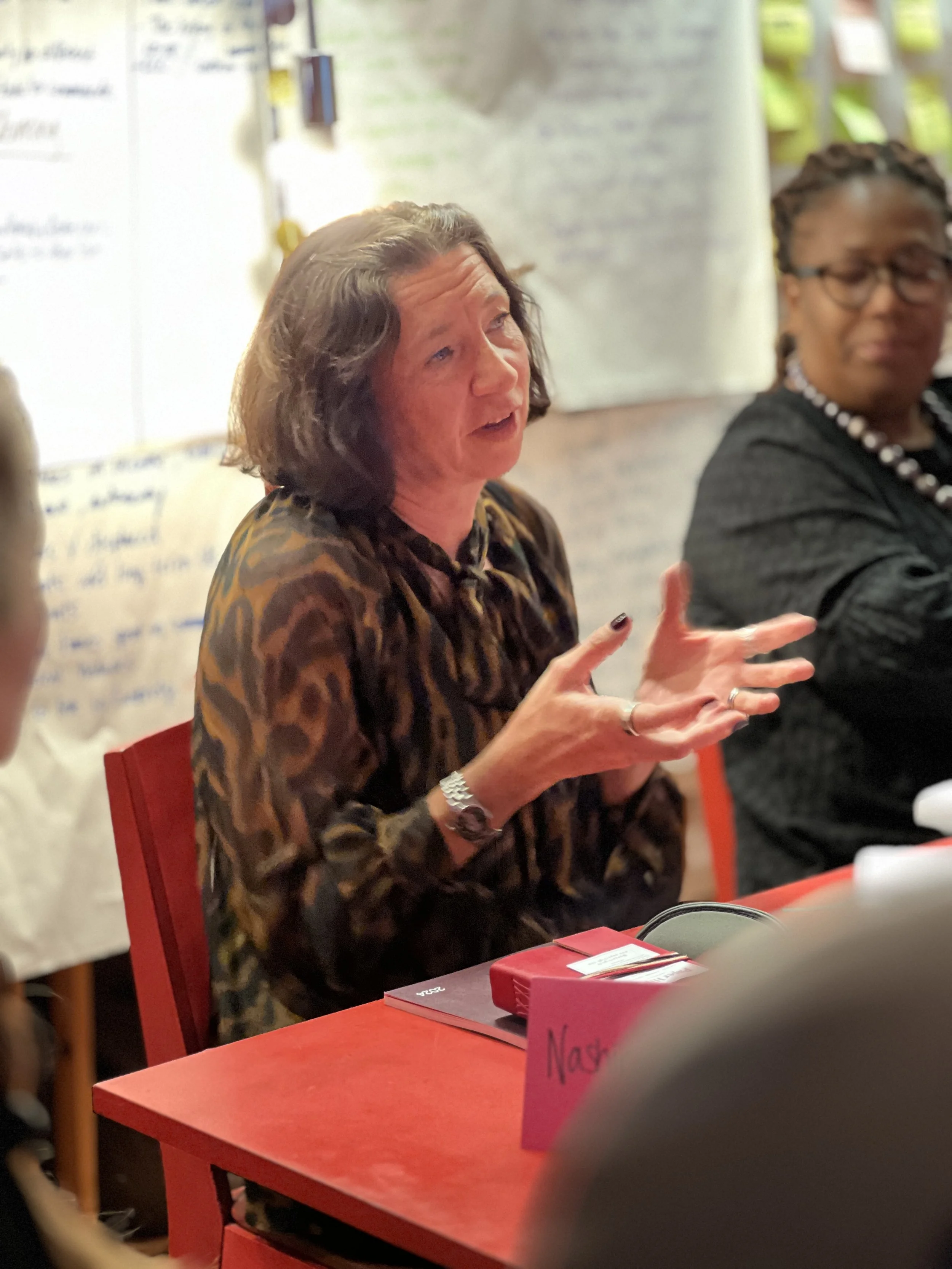
An Abbey in Action co-creation led by Together Culture in 2024
It's important to have practitioners in the room alongside senior leaders: implementers, software developers, service designers, project managers, customer service experts. They know how things get built and what the constraints are, and you need that to move from divergent ideas to workable solutions.
And to keep the focus on the needs you’re trying to serve, the people affected by the outcome need to be in the room too. As co-creators, not just as research subjects. Depending on the work, that might be patients, students, community members, residents, or the people a service is meant to support. Without them, it isn’t really co-creation.
Getting them there takes some effort. Work with leadership to recruit participants, whether they’re current clients or members of the community. Whenever possible, pay people for their time. Some are glad to volunteer for a cause they care about, but they shouldn’t be expected to, especially if most people around the table are there as part of their job.
Once they’re in the room, the session needs to be facilitated so their voices carry as much weight as anyone else’s. I once facilitated a session focused on reenvisioning neonatal care for patients and providers. Having neonatal nurses in the room to share their experiences and ideas made our output more meaningful.
Co-creation is just the beginning.
Those are four ways to create the right conditions for a productive co-creation, one where the team feels like they’ve identified some great solutions. But leaders who are new to this kind of collaboration also need to understand that it’s only the beginning. The best sessions might settle a couple of decisions but surface a dozen new ones yet to be made. Help leaders see that the more important outcome is alignment, and that listening matters more than talking.
If this has you thinking about the co-creation you’d like to try in your own work, my workshop Build it Together is a good place to start. It’s two hours of design thinking and co-creation in practice, live online, where you get to feel what it’s like to start with a person rather than a solution. You’ll try the kind of process I’ve described here alongside other people doing this work, before you take it into a room of your own. It’s pay what you can, from £9 + VAT. Book your place on Build it Together here.
And if you’re ready to go further, Groundwork is where the building blocks become a practice. This is where you take co-creation into your actual context, with real people, real histories and real power dynamics, and build the skills to keep it going over time. Find out more about Groundwork and book a free 15-minute call here.