We Were Never Powerless. We Were Just Told We Were. And Then, We Began to Believe It… Let's Live a Different Story.
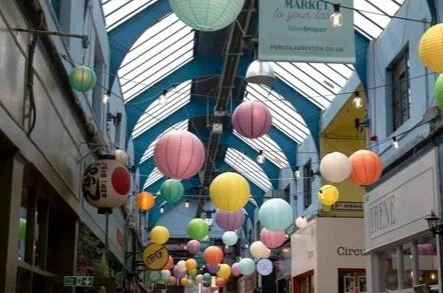
Photo: Brixton Market
This blog is for those of you looking for a next step: whether you are just getting started as changemaker, or looking to shift your strategy as you sense there's an invisible barrier getting in your way that you need to bring into the light.
This month I joined a call with community organisers making the impossible, possible across the UK. In Frome, Somerset, an entire neighbourhood working to be brought under cooperative stewardship. In Brixton, a community raising millions to Buy Back Brixton Market from a private equity firm rather than watch it disappear into another financier's portfolio. These groups are conduits of energy, vitality, and belief that they are bigger than the sum of their parts.
These are not distant dreams. Nor is it easy work. But it is real. As Citizens' guru Jon Alexander put it: "We are creating a space for politics to move into."
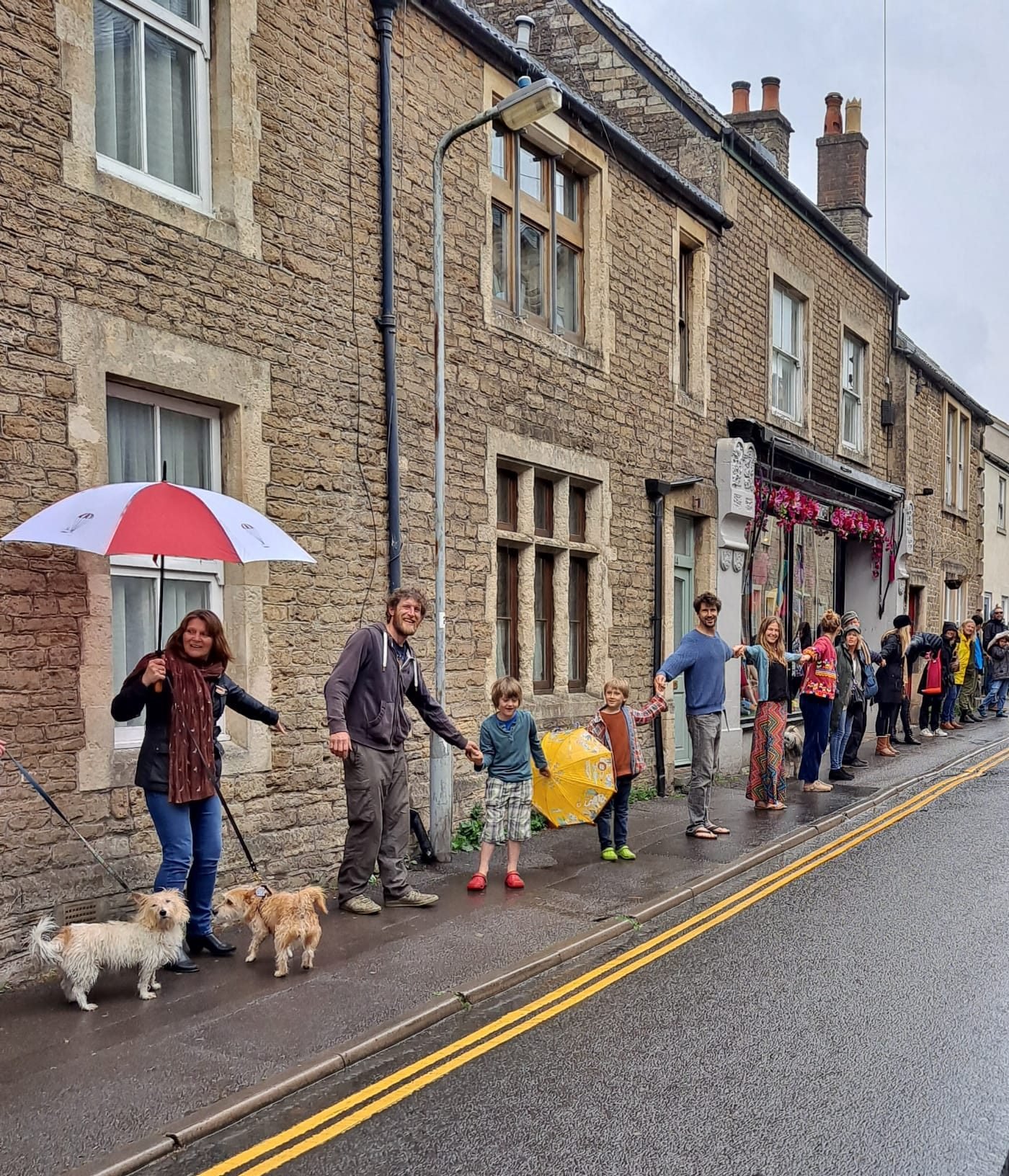
Photo: Neighbours in Frome, Somerset
Politics is a game shaped by what people believe to be possible and true. That's why when politicians get into power, they frame a story that enables their power to continue. Over decades these stories morph into beliefs that go unchecked because they become part of our culture. They feel like laws of nature, but that does not make them so.
At the beginning of this year, Together Culture had an extraordinary opportunity to purchase a heritage property in The Kite, a well-refurbished, move-in-able building that could have been the home of a revitalised cooperative society. The price tag? £1.7m. Steep, but when the community behind Buy Back Brixton Market is galvanising around £50m, hardly impossible. But impossible is what it felt like. People kept telling me: it's too good to be true.
So we changed tack. We had to figure out why people couldn't dream that big. What story have we been believing? Does it serve us? And where are the cracks so we can begin to live a different story and make a different reality tangible?
I did some digging to piece together the story of community power from the voices of prime ministers across nearly fifty years. Whilst wealth has not trickled down, the story we've been told about who we are and what we are capable of has seeped deep into our self-belief.
Read this and tell me if it rings any bells. How does it show up in your life?
"There is no such thing as society. There are individual men and women, and there are families." Margaret Thatcher, 1987. The market knows better than you, and you are in competition with your neighbours.
Tony Blair promised the British people would be "liberated from the forces of conservatism that have so long held them back." Devolution began. Investment arrived. But did the system of power change? It did not. 'The market' was left in control.
Gordon Brown assured us there would be "no return to boom and bust" until 2008 revealed the all knowing 'market' was definitively operating for the benefit of financial institutions ordinary people had no power to hold accountable. Yet, taxpayers were called on to save 'the market' because somehow that was in our best interest?
David Cameron told us we were "all in this together" while stripping away the community infrastructure through which people might have organised a different response. His Big Society was announced at the precise moment funding for civil society was being cut. Community power as cover story for state withdrawal. Almost as if it was designed to fail so we believed even less in the power of community.
And now Rachel Reeves, promising to be an "iron Chancellor" with "non-negotiable" fiscal rules (that Andy Burnham thus far is saying he will subscribe to) as though the constraints on public investment are laws of physics rather than political choices, as though the question of who controls the economy has already been settled and the answer is not us.
Different parties. Different decades. The same story. The economy is too important and too complicated to be left to communities. Your job is to cope, to manage, to consume, to occasionally vote. Not to build. Not to own. Not to steward. Not to decide.
Is that story true? I categorically do not believe so. People in places like Frome, Brixton, and Hastings are demonstrating otherwise. The work is very difficult. And every time they encounter a new hurdle, it further reveals that systems have been set up to prevent communities from stepping into their power. I would argue that you only build a fortress if you believe your enemy is powerful. There would be no point otherwise. Even the struggle reveals we hold powers we don't believe we have.
But that was not always the case. If we turn back the history book a few pages, a different story begins to reveal itself.
In 1868, a cooperative society opened in The Kite neighbourhood of Cambridge and by 1930, one in five residents were members. At the time of its collapse in 1990 (due to neoliberal financing hurdles) 80,000 people in a city of 101,000 belonged to the cooperative society. There were spaces across Burleigh and Fitzroy Streets selling food, furniture, and clothes including civic meeting rooms for lifelong education, social debate, and community life. Every time you bought something, you gave your membership number (our Kite Heritage work has revealed that many local residents still remember their families' numbers decades later) and at the end of the year you collected your divvy. A share of the surplus, returned to the people who built it together. Divvy Day was a community ritual.
The people who shaped and were shaped by the cooperative society believed they had power to shape their economy.
This snapshot from Cambridge is just one of countless examples of people who lived a very different story of community power. That proves it's possible. But how do we develop the skills to help people within our sphere of influence find the story that is not working, believe a different one, and step into living it?
Developing those skills is why Together Culture created our Digital Co-Learning Community.
Nobel Prize-winning economist Robert Shiller showed that economic stories travel through societies in clusters. Stories aren't isolated, they are part of Narrative Constellations. That is what makes them so hard to unpack and shift. One idea is held in your mind (in our minds) by other ideas.
The story that communities can't shape and steward their economies is held in place by a whole constellation of related stories about who gets finance and what terms are fair, what counts as legitimate governance, what 'realistic' and 'successful' KPIs look like.
To shift one story, you need to map its whole constellation and find where a new one can begin to take root.
This is not abstract. It is a practical (and powerful) skill. And it is learnable.
The Cambridge co-op is a crack in the conventional economic constellation. So are Frome and Brixton. So is the Kite Heritage Project through which we're gathering oral histories and reactions to Divvy Day and staging street theatre to help people literally step into the story of cooperative economy that once was and begin to imagine how it could be again.
Each is a moment where the old story fails to account for what is actually happening. Those moments, strategically connected and built upon, are how a new story gains the critical mass to shift what feels possible at scale.
If enough of us develop the skills to map these constellations and build strategies around them, to get to the root of how our change journeys can result in meaningful transformation, be it through our activism, our workplaces, our schools, our sports clubs, we don't just change a neighbourhood. We change what the next generation believes is possible. We create, as Jon Alexander put it, the space for politics to move into.
This is why we started the Together Culture Digital Co-Learning Community. Our free workshop Find the Story is the entry point.
You bring a real situation in an organisation, a community, a neighbourhood, a workplace and together we map the story holding it in place, where it came from, and where the leverage points are for something different to take root.
Every person leaves with the start of a Narrative Roadblock Map built for their own context. Not theory. Something to use the next day.
The next session is 11 September. Completely free.
If what you've just read has made you think about the story running in your own context (the one that keeps making the possible feel impossible) I encourage you to come along and explore. We're all learning together!
Register here → Find the Story — Together Culture CAMBRIDGE