The Changemaker’s Toolkit | Are you creating a cocoon or a cage?
Do you remember being stuck on a project - hands glued to the problem, watching everyone else seem to "get it" while you spiralled into that negative thought: Why bother trying?
I was seven years old, staring at a toilet paper roll that was supposed to be an angel. It looked like a craft disaster. The wet glue felt sticky on my fingers, and I was gluing my own hand instead of the cardboard.
Around me, everyone else seemed to know what to do. The adults in my family loved comparing my cousin Elisa and me: comparing heights, grades, who was "better" at things. I felt like I was never enough.
Then Elisa quietly stepped in. She didn't laugh. She didn't take over completely. She just picked up her jar of gold glitter and dusted it over my wet mess. Suddenly, a beautiful angel emerged.
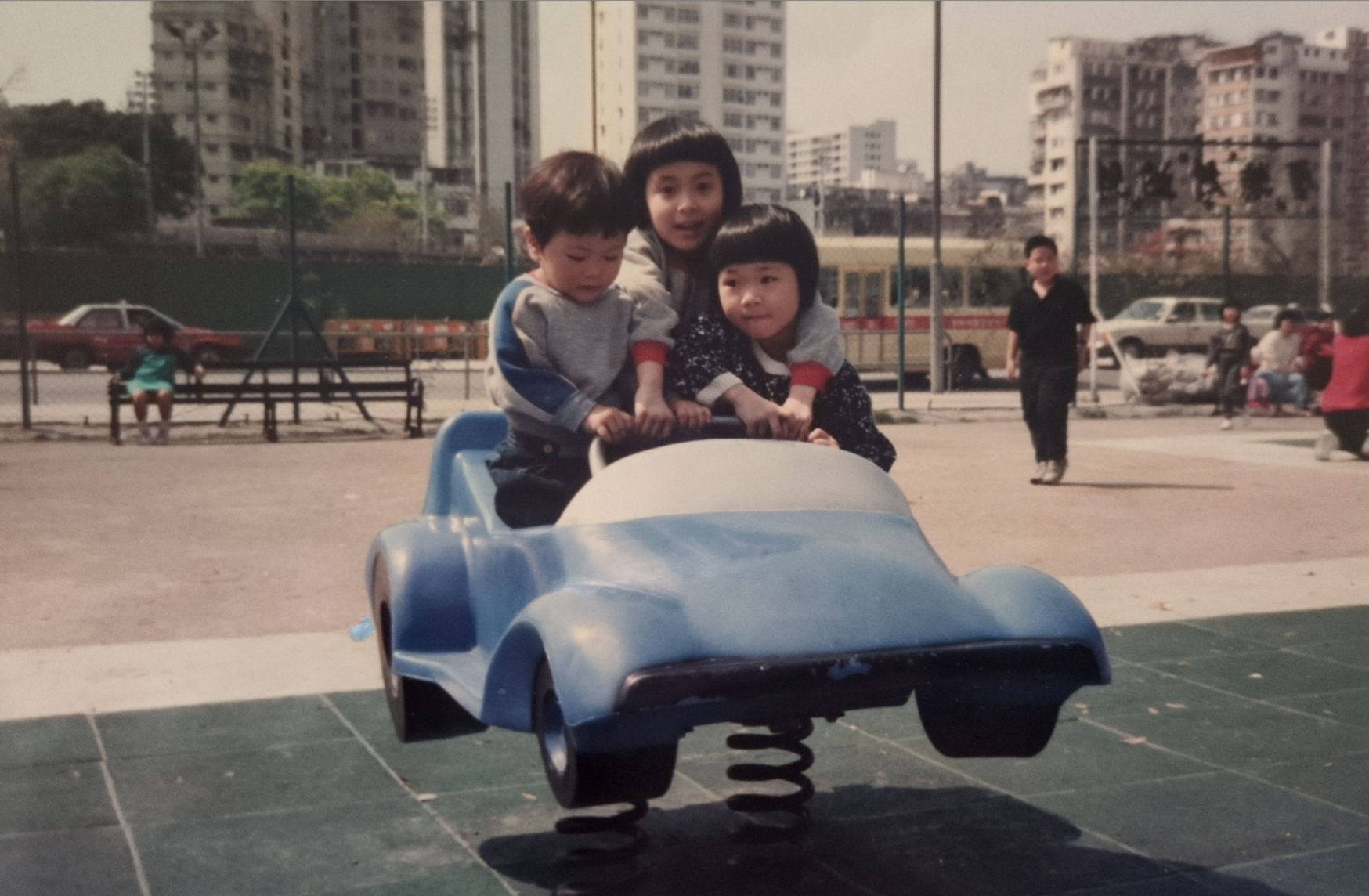
Pauline Leung as a child, far right.
She handed it back to me like it was no big deal. But in that moment, she taught me something I wouldn't understand for decades: this is what "Power With" looks like.
Real collaboration isn't everyone doing everything together. It's knowing when to step in with your gold glitter, and when to let someone hold their own messy toilet paper roll.
Here's where most of us get stuck:
Someone in your group struggles. Maybe a volunteer who keeps disappearing, or a colleague who won't collaborate.
You hover. You rescue. You end up doing their work because "it's faster if I just do it." Or worse, you exhaust yourself wishing everyone was as committed as you are. Sound familiar?
When you unstick yourself from judging your group, you unstick yourself from judging yourself. You move from "Power Over" (comparing, controlling, correcting) to "Power With" (noticing, supporting, dusting with gold).
The question is: are you creating groups that feel like a cocoon or a cage?
This is why I'm facilitating Nurture Radically Collaborative Teams, starting February 2025.
Not another training that inspires you for a week, then fades. This is muscle memory for collaboration, practiced over 5 live sessions with a small group of changemakers who, like you, are tired of watching groups fall apart.
You'll walk away with practical tools you can use immediately:
Personal Weather Report - Your group stops performing "fine" and starts showing up as human
Team Wheel - Diagnose what's actually broken (hint: it's usually not personalities)
SCARF Model - Understand why people shut down and how to create safety
Appreciative Feedback - Build each other up instead of tearing down
And most importantly: a support system that lasts. Your Collaboration Pod becomes your permanent crew; the people who walk through the next typhoon with you.
Over the next few weeks, I'll be sharing more stories from my journey, from feeling helpless in my first global role to learning how to mobilise people without formal authority. I'll also share some of the tools we'll practice in the course.
But for now, I'm curious:
When was the last time your group felt like a cocoon instead of a cage?
If you can't remember, let's change that together.
I can't wait to learn and change with you,
Pauline Leung
Facilitator of Nurture Radically Collaborative Teams