Ellie Breeze, Together Culture’s Community Director, discovers hope in the economy.
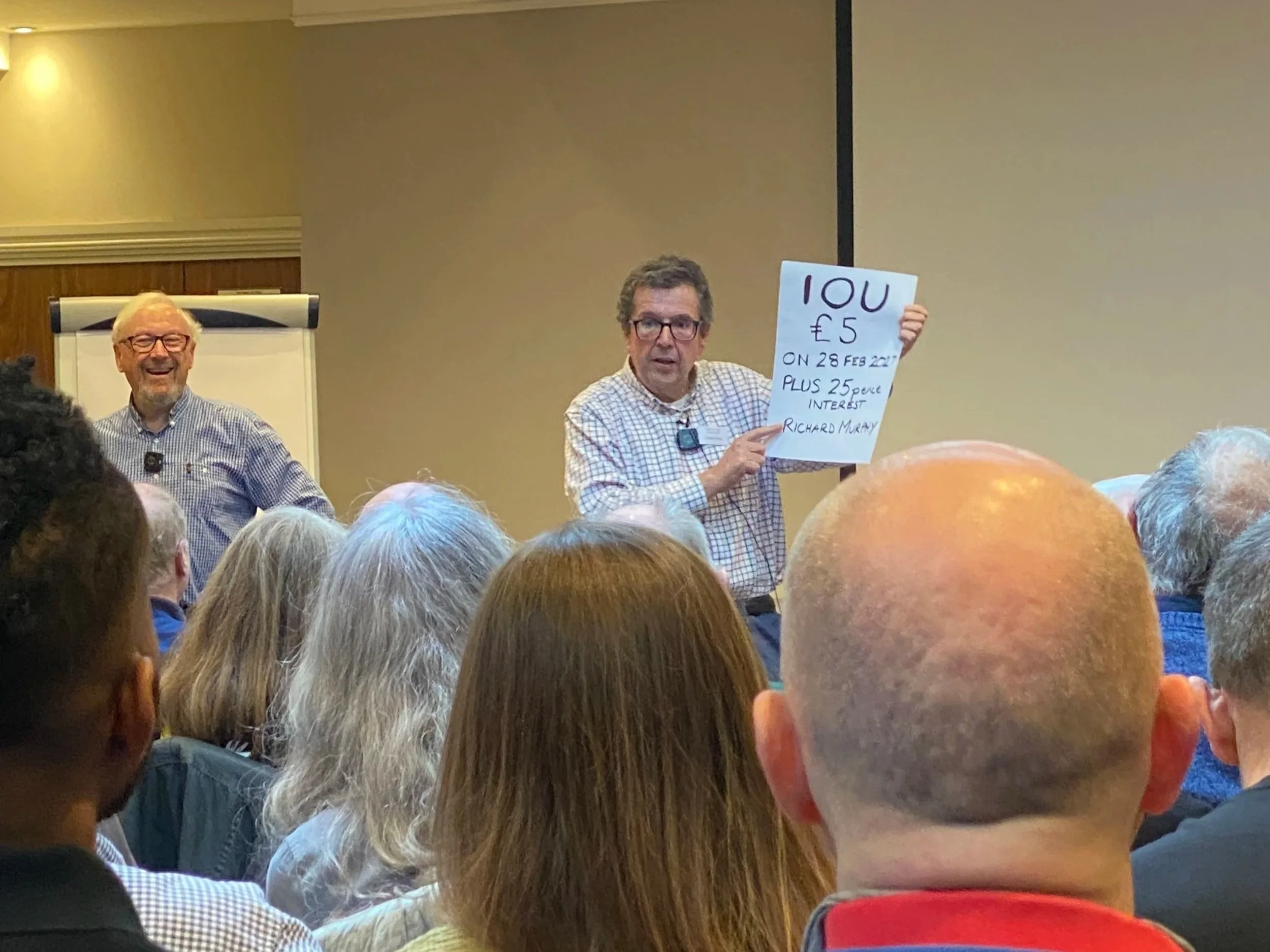
Richard Murphy and Clive Parry at the Funding the Future conference
I’m not an economist…or so I thought.
I didn’t study economics at school or university, and for most of my life I’ve filed “the economy” under Things Other People Understand. The economy is central to key issues like poverty, climate and inequality, but the technical bit felt like someone else’s job.
Lately, I’ve been shifting my mindset. Little by little, I’ve been dipping my toes into new economic thinking, including attending Richard Murphy’s Funding the Future conference on 28 Feb.
The more I learn, the more I realise I have an economic contribution. In fact, it's critical. Here's what I've learned - and if you consider the economy to be something best left to the experts, I hope this helps you step out of your comfort zone and into your economist shoes too!
Remembering what the economy is actually for
Richard Murphy is an economic justice campaigner and accountant who has spent years challenging the myths that keep our current system in place.
To kick off the event, Murphy took us back to the origins of political economy in the 18th century, when Adam Smith wrote about “moral sentiments” – a way of thinking rooted in empathy and concern for others. Over time, those ideas were overshadowed by what we now call neoliberalism.
At the heart of neoliberalism is a big claim: Markets should be “free” and governments should be hands off. In this worldview, markets are seen as naturally wise and self-correcting. Regulation is treated as interference. If governments step back and let competition rip, the story goes, we’ll all be better off. However, looking at today’s levels of inequality, insecurity and environmental breakdown, it’s hard to say that promise has been fulfilled.
Where money really comes from (and why that changes everything)
One part of the day that really stretched my brain (in a good way) was Murphy’s explanation of how money actually works in a country like the UK.
In a country with its own currency (like the pound), the government is the issuer of that currency.
New money comes into existence when the government spends - for example paying nurses, building schools, funding services, buying things from the private sector.
Taxes do not “fill up a pot” that the government then spends from, the way a household would. Instead, when taxes are paid, that money is essentially removed from circulation.
In other words: There is no money in the system until the government creates it and spends it.
That means the classic story – “we can’t afford decent public services because there’s no money left” – is deeply misleading. Households and businesses have to get money before they can spend; a currency-issuing government works the other way round.
Taxes still matter, of course, because they help control inflation by taking money out of circulation and they create demand for the currency (we need pounds to pay UK taxes). But they don’t directly “pay for” hospitals, schools or social security in the way we’re usually told.
Once you see that, it becomes much harder to argue that chronic underfunding of public services is some kind of unavoidable act of nature. It’s a political choice.
Beyond financial capital: what are we really measuring?
Murphy also talked about the idea that there are (at least) five kinds of capital: environmental, financial, human, physical and social. And yet our public conversation behaves as if financial capital is the only one that counts.
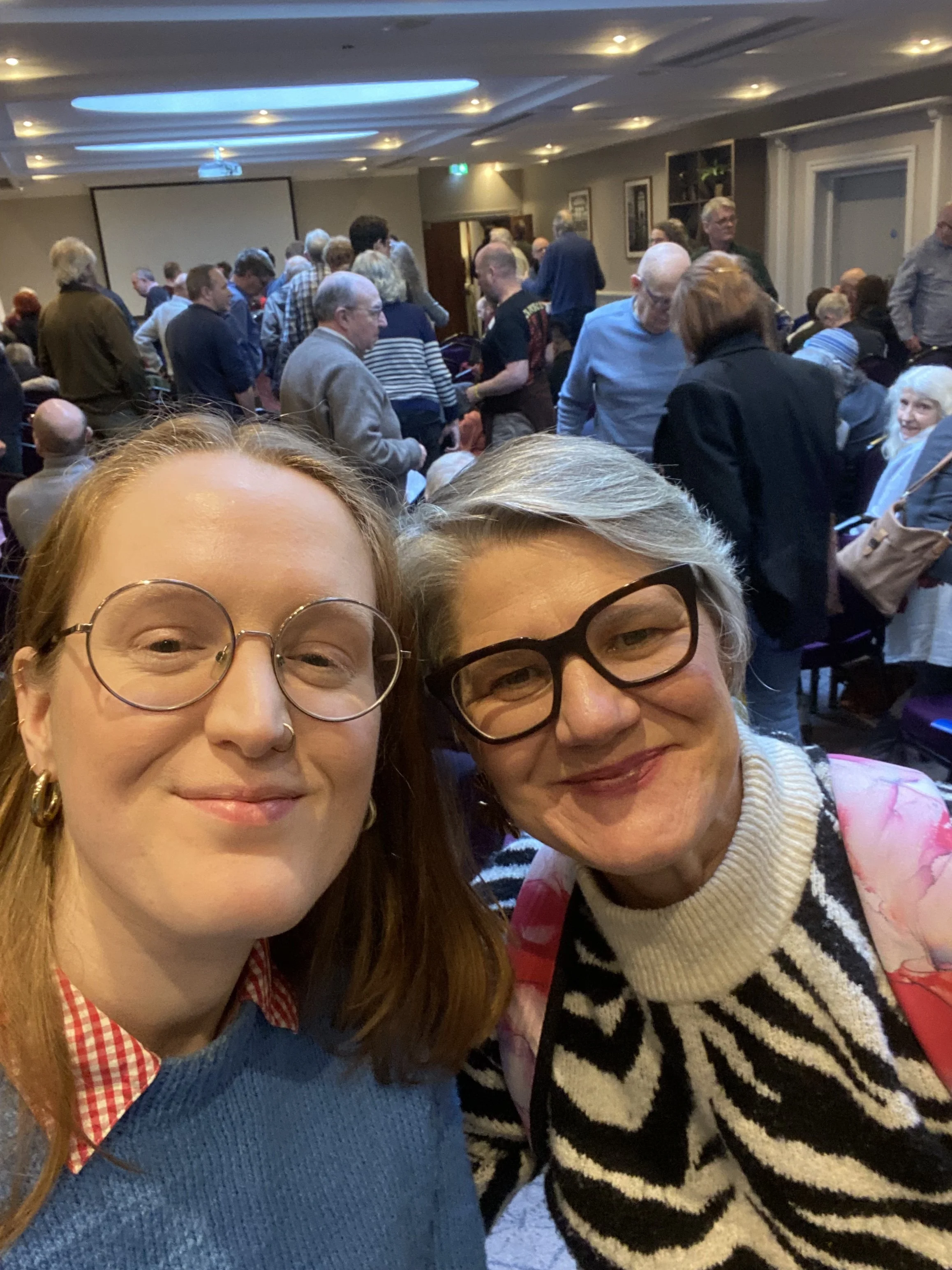
Ellie and Heather at the Funding the Future conference
This shows up in our obsession with GDP – the total monetary value of all goods and services produced in a country in a year. GDP is treated as the measure of national success. But it tells us almost nothing about how people are actually doing. It doesn’t tell us who benefits from growth – the already-wealthy, or everyone. It doesn’t tell us whether ecosystems are thriving or collapsing. It doesn’t tell us whether people feel safe, connected and cared for.
Murphy shared a simple example that made it really tangible for me:
If a household of two people splits up through divorce, GDP goes up. Suddenly we need two homes instead of one, two kettles, two beds, two energy bills. More stuff is bought; more money changes hands. On paper, the economy looks “healthier”. But for the people in that story, wellbeing may have dropped significantly.
What would it mean to define prosperity around human and environmental wellbeing, not just financial churn?
Hope as a verb
I left the conference feeling more hopeful than I had in a long time. Economic language and processes are deliberately obscure, but economists are just the people that help shape the systems that enable us to live in community. As citizens, we're all economists. By believing we’re not, we give our power away.
At one point, attendees were invited to stand up and say where they had travelled from. Sheffield. Wales. Southampton. All over the UK. There was even someone who’d come from Poland. Around the room, the question that kept coming up - what can we do?
That’s the funny thing about hope. It’s not passive, it’s an action.
It starts with how we feel, what we think, and how we act – every day.
Feel: Do we feel like empowered citizens with choices to make and actions to take? Do we feel - deeply, genuinely - that change is possible?
Think: Are we willing to challenge the stories we’ve been told about money, work and value?
Act: Are we showing up in our communities? Are we moving beyond conversation, and starting to build alternatives and take part in experiments?
If you’re curious, Richard Murphy’s YouTube channel is a really accessible starting point, and Italian economist Clara Mattei offers powerful critiques of austerity and the way economics is used to make injustice look “inevitable”. I’ve linked to some resources at the end.
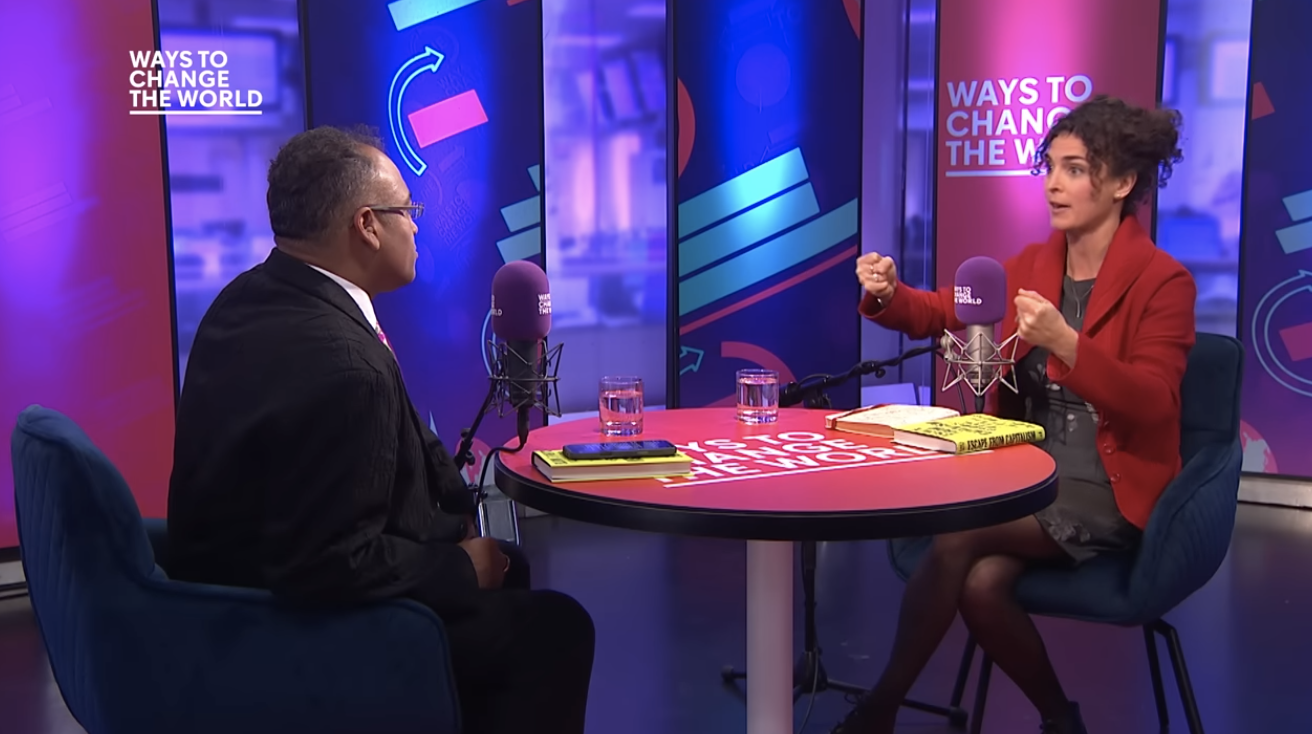
Economist Clara Mattei on the Ways to Change the World podcast
Culture change: the missing piece
One thing was very clear to me by the end of the day: new ideas alone won’t build a regenerative economy. We can have the best policy proposals in the world, but if our culture is still shaped by individualism, competition and scarcity, we’ll keep recreating the same patterns in new forms.
That means culture change isn’t optional, it’s essential. We need spaces where we can practise living differently – together.
That’s why I can’t wait for Together Culture’s Living Together Retreat on Saturday 14 March.
We’ll have fun (yes, including “Bog Fashion,” exploring Nordic style circa the year 900!). But beyond the play, we’ll be learning the practical skills of collaboration and participatory decision‑making - exactly the capacities that re‑root economy in community.
This year, we'll be applying those skills in two group projects:
The Kite Heritage Festival – unearthing and celebrating the contribution of working‑class culture to Cambridge innovation
The Kite Permaculture Garden at Brandon Court - our multi-generational project where we’re learning from nature about how to think like an ecosystem
It’s not too late to join us — and I truly hope you will.
Sign up for the Living Together Retreat here.
You hold more power than you think
The economy isn’t some mysterious machine that only experts and politicians can touch. Frankly, they’re not doing a great job of stewarding it.
It’s down to us to educate ourselves and expand our view of what’s possible, decide we want things to be different, and then make it happen.
Resources
Richard Murphy regularly shares content from wealth inequality to the myths around government debt and neoliberal austerity on his Youtube channel
In this Channel 4 interview, Italian economist Clara Mattei argues that many of the problems that we see as inevitable - poverty, unemployment, inflation - are built into the system and shored up by models and theories designed to convince us that there is no alternative.
Finding the Money: In this documentary, an intrepid group of economists is on a mission to instigate a paradigm shift by flipping our understanding of the national debt — and the nature of money — upside down.